
The Connection Between GLP-1 Medications and Nutrient Deficiencies: What You Need to Know
Your guide to understanding how appetite changes on GLP-1 can affect nutrient intake and how to support your body along the way.
Clinically reviewed by: Priscilla Rodriguez, MHA, RN
Last updated: January 2026
GLP-1 medications are effective tools for appetite regulation and metabolic health. As appetite shifts, it’s common to wonder whether eating less could also mean missing key nutrients. Some people notice fatigue, low energy, or subtle changes in how they feel after starting treatment, which can raise questions about nutrition.
This guide explains how GLP-1 medications can influence nutrient intake, which nutrients may need closer attention, and how to support your body while continuing therapy.
Understanding GLP-1 Medications
GLP-1 medications work by mimicking a hormone your body naturally produces after eating. This hormone helps regulate blood sugar, digestion, and appetite. By slowing digestion and increasing feelings of fullness, GLP-1 medications help reduce appetite and support weight loss.
These effects are beneficial, but they also change eating patterns. Many people feel full with smaller meals, eat less often, or lose interest in foods they once relied on for energy and nutrition. Over time, those shifts can influence nutrient intake if meals aren’t thoughtfully balanced.
How GLP-1 Can Affect Nutrient Intake
GLP-1 medications don’t directly strip nutrients from the body. Instead, nutrition changes usually happen for two reasons: reduced appetite and slower digestion.
When appetite is lower, portion sizes often shrink and meals may be skipped unintentionally. Slower digestion can also affect how efficiently certain nutrients are absorbed. Together, these changes can increase the risk of low intake if meals lack enough protein, vitamins, or minerals.
For many people, the issue isn’t absorption alone, it’s simply eating less overall.
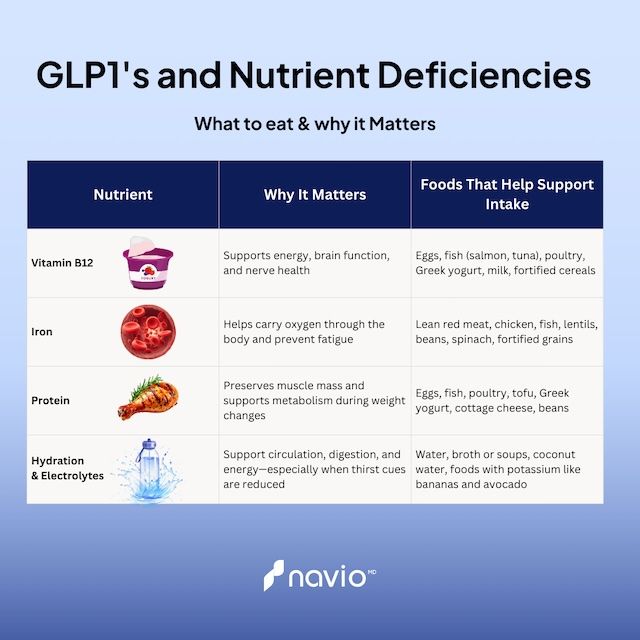
Nutrients That May Need Extra Attention
Not everyone taking GLP-1 will develop nutrient deficiencies. However, some nutrients tend to deserve closer attention when appetite is reduced. When intake of these nutrients drops too low, people may notice fatigue, weakness, lightheadedness, or reduced stamina.
Appetite Changes and Nutrient Density
As appetite decreases, food quality becomes more important than food quantity. Eating less doesn’t have to mean getting less nutrition, but meals need to work harder for your body.
Nutrient-dense meals that include protein, fiber, and key micronutrients help ensure your body stays supported even when portions are smaller. Eating regularly, rather than waiting until hunger feels strong, can also help prevent gaps in intake and reduce energy dips throughout the day.
Fatigue and Energy on GLP-1
Fatigue is one of the most common concerns people report while adjusting to GLP-1 therapy. In many cases, it’s linked to under-fueling rather than the medication itself.
Low energy may stem from:
- Eating too little overall
- Skipping protein
- Low iron or B12 intake
- Mild dehydration
Addressing nutrition often improves energy without changing medication or dosing.
Supporting Nutrition While Taking GLP-1
GLP-1 therapy works best when paired with consistent, supportive nutrition. Rather than focusing on strict rules, most people benefit from steady routines and simple meals that are easy to tolerate.
Helpful strategies may include:
- Prioritizing protein at each meal to support energy and muscle maintenance
- Including fiber-rich foods when tolerated to support digestion and blood sugar balance
- Staying mindful of hydration, even when thirst cues feel less noticeable
- Considering supplements when appropriate, and with clinical guidance
Personalized Care Makes the Difference
At NavioMD, GLP-1 care goes beyond prescriptions. Our clinicians look at the big picture, appetite changes, energy levels, nutrition patterns, lifestyle, and daily routines, to understand how your body is responding.
Through secure virtual visits, care plans can evolve over time, helping identify gaps early and support long-term metabolic health in a way that fits real life.
Bringing It All Together
GLP-1 medications don’t inherently deplete nutrients, but appetite changes can make nutrient intake easier to miss without support. Paying attention to nutrition, hydration, and energy levels helps protect your health while continuing treatment. With thoughtful care and personalized guidance, GLP-1 therapy can be both effective and sustainable.
If you’re navigating appetite changes, low energy, or nutrition concerns while taking GLP-1, our team is here to help.
Book your telehealth consultation with NavioMD today and get care designed around your body, your needs, and your long-term health.
Keywords: GLP-1 nutrition, nutrient depletion, nutrient deficiencies, vitamin deficiencies, mineral deficiencies, micronutrients, nutrient absorption, appetite suppression, reduced appetite, metabolic health, gut health, digestive changes, vitamin intake, mineral intake, protein intake, nutrient balance, nutrient density, fatigue causes, low energy, supplementation, dietary intake, eating patterns, appetite changes, weight loss nutrition, GLP-1 side effects, nutrient support, nutrition guidance, telehealth nutrition, personalized care
Citation references:
- https://pmc.ncbi.nlm.nih.gov/articles/PMC12125019/
- https://www.sciencedirect.com/science/article/pii/S2667368125000300
- https://www.frontiersin.org/journals/nutrition/articles/10.3389/fnut.2025.1566498/full
- https://www.health.com/nutritional-deficiencies-glp1s-11854512
- https://naviomd.com/blog/what-should-i-eat-while-taking-a-glp-1-a-practical-guide-to-balanced-meals-and-appetite-support
Download our high-protein, high-fiber cheat sheet
A guide to grocery shopping with high-protein, high-fiber, nutrient-dense foods.

Care designedfor real life.



Copyright © 2025 NavioMD
*Based on internal patient survey. Results vary. | Not a substitute for professional medical advice. Consult your healthcare provider before starting any treatment.